

Experience Economy as a Source of Added Value
This policy paper synthesizes expert insights voiced during the in-person session “The New Economy: Competition for Positive Development” held in Moscow on 7 October 2025 as part of the symposium “The Future of the World: New Platform for Global Growth”. The discussion focused on the competitiveness of the Global Majority countries within the emerging Experience Economy.
The experience economy is becoming a strategic tool for the countries of the Global Majority amid glocalization and the rising demand for uniqueness, cultural identity, and new forms of consumer experience. As competition shifts fr om functional attributes to meanings and emotions, countries strengthen their positions across all sectors of the economy: fr om the primary sector, wh ere the value of raw materials increases through authenticity, sustainable practices, and geographical indications, to the secondary and tertiary sectors, wh ere design, brand storytelling, events, urban environments, and creative ecosystems generate premium value and long-term economic returns. “Experience capital” acts as a universal multiplier, enhancing margins in manufacturing, services, tourism, culture, technology, and digital content.
The countries of the Global Majority are already gaining weight in global creative trade: around 60% of creative goods exports now originate from them, with the demand for localized cultural meaning driving this growth. Investments in museums, the development of urban environments, the creation of event-driven spaces, localized content, and the engagement of local communities reinforce competitive advantages and form a new layer of economic growth rooted in authentic identity. International practice confirms that sustainable success in the experience economy requires integrated public policy—development of infrastructure, education and talent, digital tools, support for the export of meanings, and the inclusion of the creative economy in high value-added chains.
Global Exports of Creative Goods, bln USD
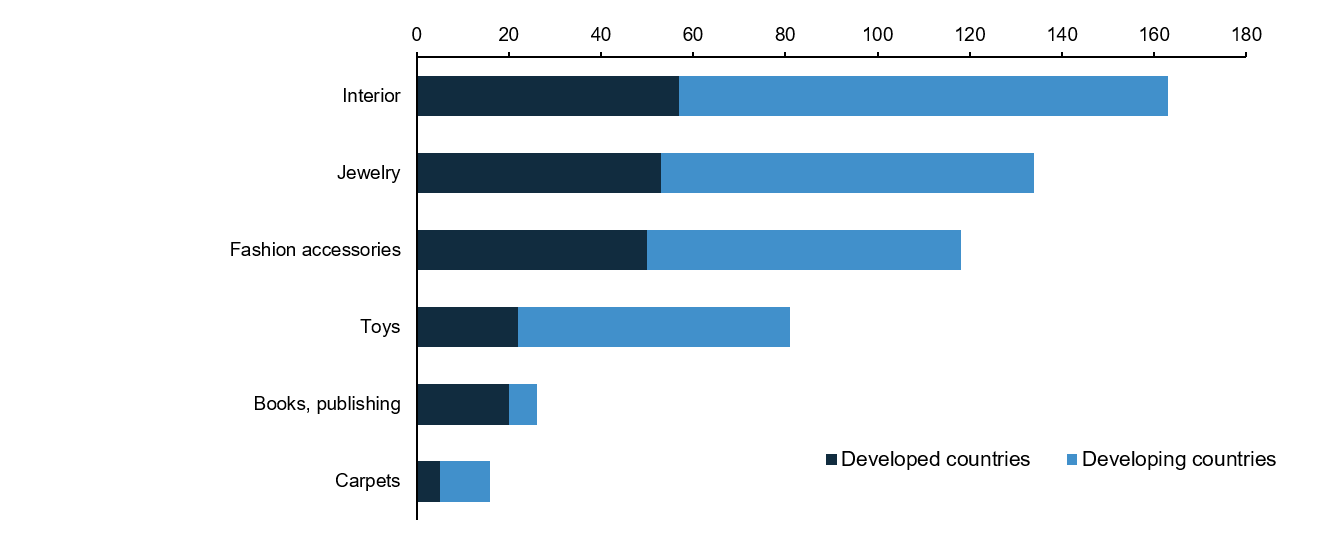
Source: UNCTAD
Authors
- Alexander Guryanov
Alexander Guryanov
Lead Analyst
Global Economy and International Institutions
- Yaroslav Yalovenko
Yaroslav Yalovenko
Head
Global Economy and International Institutions

